How PayPal Survived Competition | Case Study | Cognitute
How PayPal Survived Competition and Transformed into a Global Commerce Platform
Executive Summary
After its 2015 spin-out from eBay, PayPal shifted from a transaction-processing incumbent to a margin-focused, diversified global commerce platform. The company re-architected products, go-to-market execution, and operations to capture mobile, P2P, and merchant commerce growth. This transformation drove sustained increases in TPV, revenue, and operating margins, anchored by a strategic emphasis on higher-margin branded checkout and value-added services.
1) Company Conditions Before the Transformation
When PayPal officially separated from eBay (announced in 2014, effective 2015), it entered the market as a recognized payments leader but faced significant structural constraints.
Pre-Transformation Business Realities
- Strong brand and scale, but early signs of margin compression.
- Heavy reliance on low-margin, high-volume e-commerce flows.
- Fragmented product ecosystem across PayPal, Braintree, Venmo, Xoom, and Zettle.
- Uneven mobile experience relative to big tech wallets.
- Lacked a unified strategy for enterprise merchants and developers.
Strategic Assets Still in Progress
Braintree and Venmo offered powerful growth levers, but integration, roadmap alignment, and monetization paths were still maturing.
2) Challenges That Required Change
.webp)
A. Commoditization of Payment Acceptance
Checkout was becoming a low-margin utility as banks, card networks, and digital wallets competed aggressively on UX and pricing.
B. Fragmented Product and Brand Experience
Acquired platforms had inconsistent UX, duplicated capabilities, and limited cross-product synergy.
C. Margin Pressure and Inefficient Capital Allocation
Rising TPV wasn’t translating into proportional revenue or profitability due to low-margin mix and global expansion costs.
D. Regulatory and Fraud Complexity
Scale created heightened exposure to fraud, compliance challenges, and regulatory burdens demanding heavy investment.

3) The Transformation - What Changed
PayPal’s reinvention centered around four transformation pillars.
A. Strategic Repositioning: From Volume to Value
- Prioritized higher-margin branded checkout over low-margin unbranded flows.
- Expanded value-added merchant services such as fraud protection, working capital lending, subscriptions, and merchant tools.
- Shifted roadmap and pricing to favor take-rate expansion and increased lifetime value.
B. Product and Ecosystem Consolidation
- Unified merchant and consumer experiences across all touchpoints.
- Improved mobile UX and launched One-Touch checkout.
- Integrated Venmo into merchant payment rails.
- Expanded unified merchant solutions through PayPal Commerce Platform and Zettle.
- Developer-first SDKs and APIs improved conversion and lowered integration friction.
C. Operational Excellence and Risk Modernization
- Adopted ML-driven fraud detection and identity scoring.
- Automated compliance, underwriting, and payments routing.
- Streamlined operations to improve margins and accelerate product development.
D. Commercial and Marketing Shifts
- Moved from broad brand advertising to ROI-led merchant marketing.
- Adopted a developer-first GTM for enterprise merchants.
- Positioned Venmo as a social payments engine for younger users.
- Pursued selective international expansion and marketplace partnerships.
4) Tangible Measures of Success
A. Network Scale
- FY 2023: ~426M active accounts
- $1.53 trillion in Total Payment Volume (TPV)
B. Revenue Growth
- FY 2023 revenue: ~$29.8 billion, ~8–9% YoY growth.
C. Profitability Improvement
- Significant GAAP operating income and margin expansion driven by mix shift and operational efficiency.
D. Deeper Customer Engagement
- Transactions per active account increased by ~14% (TTM).
- Demonstrated stronger monetization and deeper engagement cycles.
5) Why the Transformation Worked
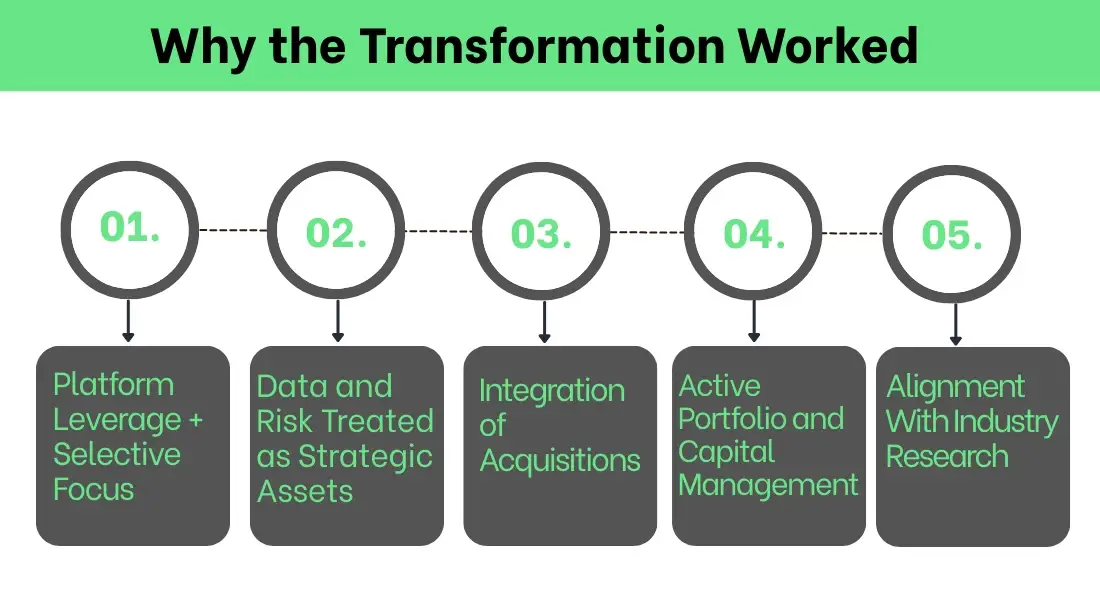
A. Platform Leverage + Selective Focus
Investments channeled into defensible, high-margin areas such as fraud, merchant services, and branded checkout.
B. Data and Risk Treated as Strategic Assets
Risk systems transformed from cost centers into commercial products and competitive differentiators.
C. Integration of Acquisitions
Braintree, Venmo, and Zettle were woven into a cohesive commerce infrastructure instead of operating as isolated silos.
D. Active Portfolio and Capital Management
PayPal deliberately shifted resources away from low-margin flows toward products with stronger ROIC.
E. Alignment With Industry Research
McKinsey and BCG frameworks highlight that payments incumbents must combine scale with differentiated, margin-rich services, PayPal followed this playbook effectively.

6) Actionable Takeaways for CXOs
1. Re-Optimize for Margin, Not Just Volume
High TPV without monetization compresses returns. Prioritize profitable journeys and high-value flows.
2. Turn Risk and Fraud Data Into Products
Automated risk platforms can both reduce fraud and generate premium revenue through merchant services.
3. Integrate Acquisitions for Developer Value
Developer experience directly influences merchant conversion and commercial performance.
4. Use ROI-Led Commercial Signaling
Shift from brand-focused campaigns to ROI-driven merchant messaging with clear value articulation.
5. Prioritize Engagement Depth Metrics
Transactions per active account are more predictive of monetization than raw user numbers.
References
- Stanford GSB: PayPal in 2015, Reshaping the Financial Services Landscape
- PayPal FY-2023 10-K and investor reports
- McKinsey Global Payments Report
- BCG: Competitive Landscape in Payments & Wallets
Read our Other Case Studies : How GIIS Achieved Growth Through Digital Transformation