Zolo Stays’s Winning Growth Innovation Strategy | Case Study
.webp)
Zolo Stays:Harnessing Growth Innovation with a Winning Strategy
Executive Summary
Over the years, Zolo Stays - one of India’s largest co-living hospitality providers - has greatly transformed itself and strengthened its backend operations, automated several processes, and built scalable operational systems.
Together with Ashok Deepan, our principal consultant and founder, Zolo Stays has re-designed its operations and deployed a 360° operational strategy spanning property management, inventory systems, centralised kitchens, procurement, vendor and infrastructure management, and backend automation workflows. These interventions not only improved operational efficiency but also materially contributed to the company’s market leadership and rapid revenue growth, with revenue exceeding Rs. 200 crore in FY24.
This case study outlines the co-living business model, the strategic challenges, the consulting services delivered, and measurable outcomes that repositioned Zolo for scale and sustainability.
Understanding the Co-Living Business Model
Co-living is a hospitality model that combines long-term residential stays with shared amenities, community experiences, and highly serviced living environments.
Zolo Stays is a well-known co-living hospitality brand with operations all across India. It began in 2015 with a mission to solve the perennial challenge of affordable, convenient, and community-oriented living for students and young professionals moving to new cities. The company started with its first property in Bengaluru, India and over the years, expanded its footprint across multiple Indian cities, becoming one of the largest co-living brands in the country.
By 2025, Zolo had grown to operate over 500 properties with more 100,000 happy customers across 10+ cities. Together they serve a diverse set of residents and demonstrate strong market validation of its model.
Zolo Stays caters to a wide demographic including students, young professionals, and working executives. Properties are fully furnished and equipped with modern conveniences such as high-speed Wi-Fi, fitness and entertainment infrastructure (like TV, gaming zone, play areas, etc.), and services including housekeeping, maintenance, and food options.
A typical co-living property goes live through several coordinated steps:
- Property Sourcing & Onboarding: Zolo identifies suitable buildings or towers and negotiates lease agreements with owners or real-estate partners.
- Furnishing & Setup: Properties are set up with furniture, utilities, kitchen services, and security systems to ensure comfort and compliance.
- Amenity Integration: Essential infrastructure such as Wi-Fi, TV, laundry, common spaces, and community engagement facilities are provisioned.
- Tenant Acquisition & Move-In: Residents browse and book through Zolo’s platform, complete onboarding, and receive support throughout their tenancy.
Unlike traditional rentals or PG accommodations, co-living emphasises community, convenience, and experience. Handling all of this at a large Pan-India scale requires uniform and robust operational systems behind the scenes.

The Need for Change
As Zolo’s operations expanded, the company was exposed to operational bottlenecks that threatened scalability and posed numerous strategic challenges :
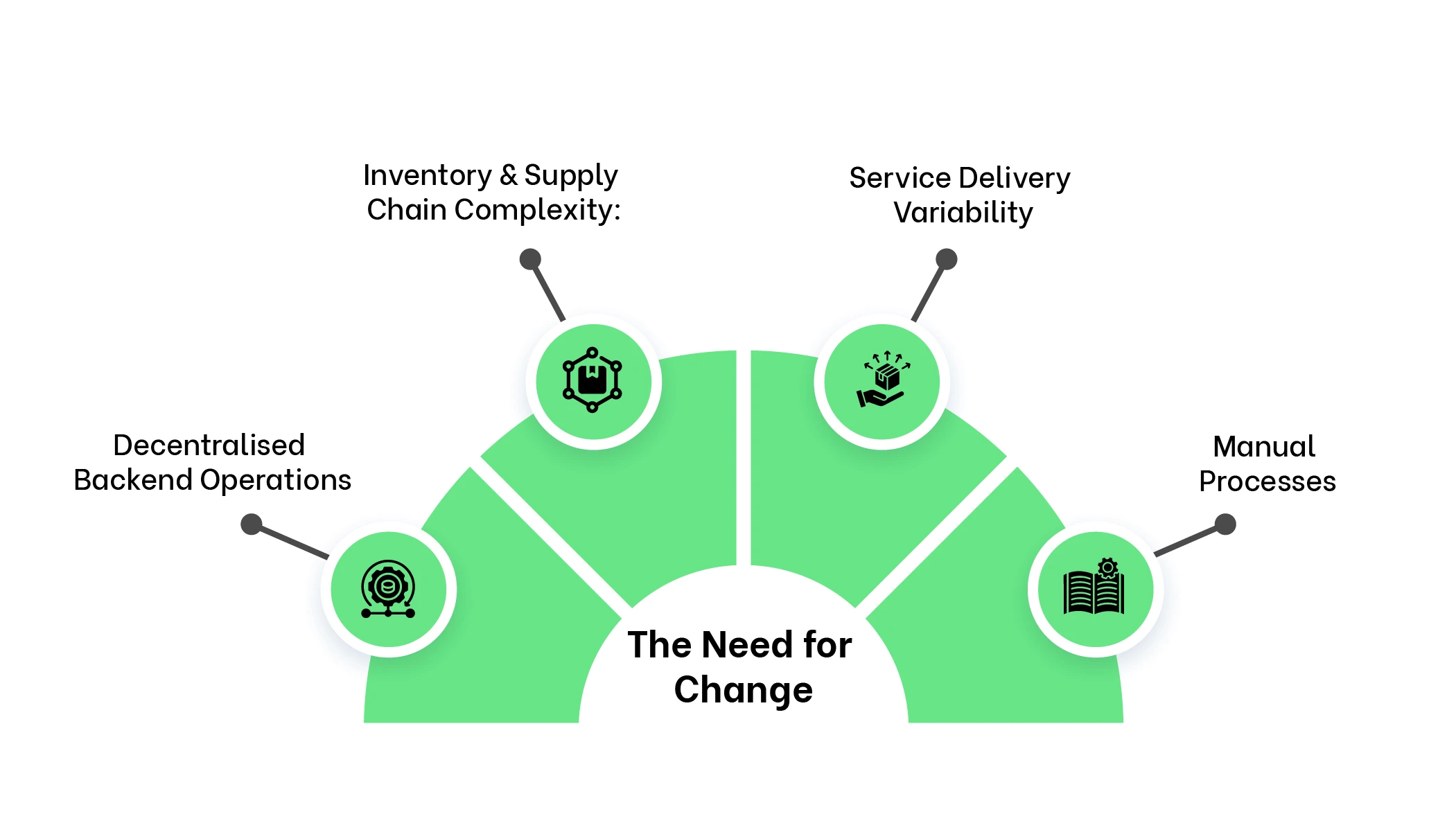
- Decentralised Backend Operations: Large teams of 100+ personnel were needed to manage properties, vendor relationships, procurement, and utilities across cities.
- Inventory & Supply Chain Complexity: Multiple suppliers and inconsistent workflows led to delays and inefficiencies.
- Service Delivery Variability: Customer experiences varied due to inconsistent infrastructure provisioning, affecting retention and brand perception.
- Manual Processes: Most backend tasks were manual, from provisioning kitchens to setting up Wi-Fi. This created friction and operational overheads.
Our team of consultants worked with Zolo to reimagine its operational framework across the full lifecycle; right from when a property is planned to when tenants move in and stay. We focused on designing, implementing, and operationalising automated and scalable systems across five major areas:
1. Backend Operations Strategy & Automation
We restructured the backend ops to minimise dependence on large manual teams and to reduce variability in execution:
- Automated Triggers for New Properties: When a property entered the pipeline, predefined automated triggers were sent to all corporate partners and third-party vendors for utilities, internet services, and TV provisioning, thus eliminating manual coordination delays.
- Reduction in Operational Teams: Through automation, workflows that previously required dozens of personnel could now be managed with leaner, tech-enabled teams, accelerating deployments and improving consistency.
This system ensured that each new property’s backend setup was repeatable, controlled, and tracked from a central dashboard.
2. Property & Inventory Management Ecosystem
We designed a digital operation ecosystem comprising:
- Inventory Management: Standardised tracking for furniture, appliances, kitchen supplies, and maintenance stock across properties.
- Supply Chain Integration: A unified procurement system linked to real-time property demand data to automate purchase orders and vendor assignments.
- Mobile App for Tenants: A customer-end mobile app was developed, allowing residents to place service requests, pay fees, track maintenance, and engage with community events.
The ecosystem streamlined supply flows and enhanced responsiveness to tenant needs, directly influencing retention.
3. Centralised Kitchens & Procurement Strategy
Food and kitchen services are high-touch components in co-living. We helped Zolo:
- Set up centralised kitchens for clusters of properties to optimise food costs and quality.
- Establish procurement standards and partnerships for bulk purchase of perishable and non-perishable goods.
- Implement vendor scorecards and standard contracts to enforce quality and pricing discipline.
These measures ensured consistent food quality and predictable cost structures while reducing leakage and waste.
4. Entertainment & Amenity Infrastructure Partnerships
Residents increasingly expect amenities such as high-speed Wi-Fi and TV entertainment integrated into their monthly charges. We drove:
- Corporate Tie-Ups: Agreements with telecom and entertainment providers ensured faster infrastructure rollout and negotiated rates for residents.
- Standardised Onboarding Flows: Amenity provisioning became part of the automated backend workflow, so wifi and TV services were activated as soon as the property went live.
This improved tenant satisfaction and differentiated Zolo’s offerings from traditional PG services and rental apartments.
5. Vendor Management & Operational Digitisation
Zolo’s vendor ecosystem (spanning maintenance, cleaning, utilities, and technology services) was consolidated and standardised:
- Vendor Portals: Vendors were integrated into a central platform with automated triggers, performance tracking, and SLA alerts.
- Digitised Workflows: Daily operational tasks such as maintenance logs, housekeeping schedules, and inventory restocking were moved from manual spreadsheets to an automated system.
This reduced errors, improved compliance, and enabled data-driven governance of property services.
Customer Retention and 360° Strategy
In co-living, tenant retention matters as much as acquisition, if not more, because long-term stays stabilise occupancy and revenue. The consulting strategy embedded tenant retention mechanisms across the lifecycle:
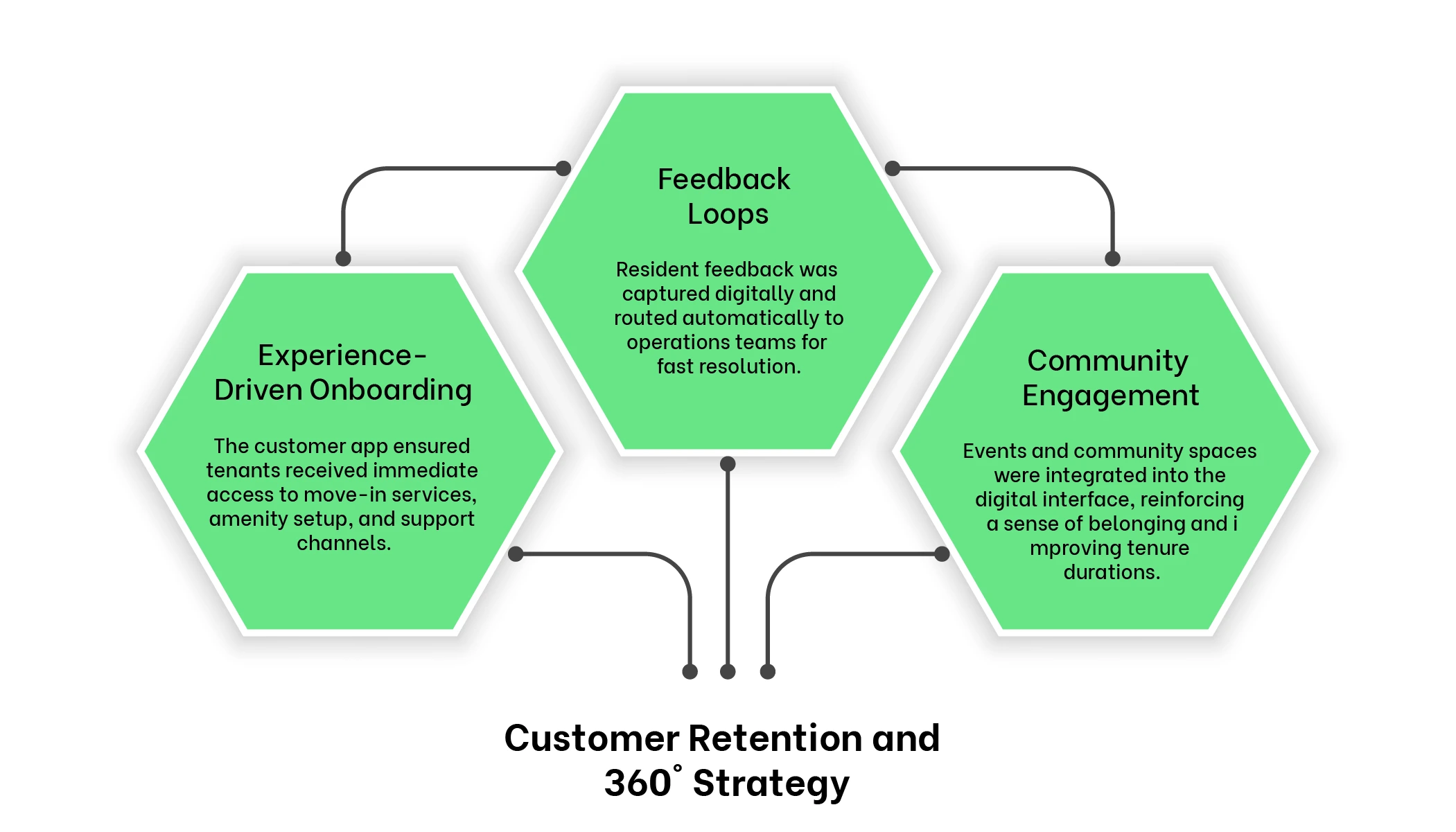
- Experience-Driven Onboarding: The customer app ensured tenants received immediate access to move-in services, amenity setup, and support channels.
- Feedback Loops: Resident feedback was captured digitally and routed automatically to operations teams for fast resolution.
- Community Engagement: Events and community spaces were integrated into the digital interface, reinforcing a sense of belonging and improving tenure durations.
Retention strategies were not add-ons but integrated into the technology, vendor partnerships, and operational design, thus contributing to higher renewals and referral volumes.
Business Outcomes of Interventions
Post our consulting engagement, Zolo Stays realised measurable gains:
- Zolo is today the largest co-living brand in India, operating in 10+ cities with 500+ properties and over 100,000 customers - figures reflecting scale and market leadership.
- Revenue expanded from Rs 43 crore (FY22) to over Rs 200 crore (FY24), representing a fivefold increase in two years.
- Operating revenue more than doubled from Rs 95.5 crore (FY23) to Rs 204.4 crore (FY24), with residential accommodations accounting for around 93% of revenue.
- Backend automation reduced manpower demands drastically while improving speed to market for new properties. Automated triggers and vendor integrations slashed setup times and inconsistencies.
- Standardised amenities, centralised kitchens, and digital support boosted resident experiences and retention metrics.
- The customer app provides seamless engagement, reducing complaint resolution times and improving loyalty.
By adopting a full-stack co-living model that integrates technology with managed accommodation services, including furnished rooms, utilities, housekeeping, and communal experiences, Zolo has indeed managed to lead the market of co-living hospitality.
Consulting Insights and Strategic Lessons
Several key insights emerged from this engagement that are relevant to leaders across asset-light, service-intensive sectors:
1. Automation Enables Scalability sans Linear Headcount Growth - Zolo’s backend automation replaced large manual teams and reduced variability, enabling rapid property rollouts and consistent service quality.
2. Partnerships Expand Capability Without Heavy Capex - Strategic tie-ups with dish TV providers reduced time and cost to deliver infrastructure, enhancing the resident experience while optimising vendor terms.
3. Integrated Tech Ecosystems Improve Retention - A customer-facing app connected tenants with services and community touchpoints, transforming operating systems into loyalty engines.
4. Data-Driven Operations Drive Predictability - Digitising supply chain, procurement, and maintenance workflows produced actionable insights, enabling proactive decisions and better resource allocation.

Conclusion
The transformation of Zolo Stays over the past two years demonstrates how targeted consulting grounded in automation, operational strategy, and ecosystem partnerships can turn complexity into competitive strength. By reengineering backend operations, centralising critical workflows, partnering with vendors and service providers, and embedding customer-centric technology, Zolo charted a path from rapid expansion to scalable profitability and industry leadership.
As co-living and asset-light hospitality evolve, organisations that invest in operational excellence and integrated tech systems will be best positioned to sustain growth, improve retention, and deliver differentiated experiences in competitive markets.
Read Our Other Case Studies : How Vedantu Boost Student Engagement
.webp)